A Spanish country table: well, oven, garden
A Spanish country table: well, oven, garden. How a Mediterranean garden, a wood oven and well water shape the small plates served with a drink on a Spanish country house table, and how the campo sets the
- Published: September 15, 2026
- 1151 words
- 6 min read
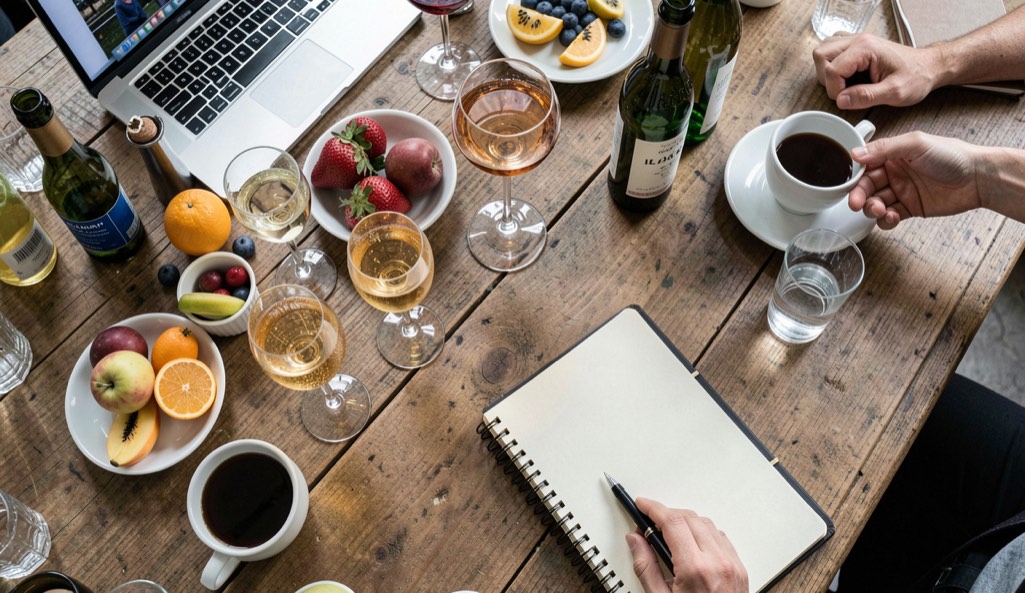
A country house table in Spain is set by three things before any recipe is chosen: what the garden gives that week, what the wood oven can hold, and how much water the well or aljibe can spare. The small plates that arrive with a drink are rarely a menu decision. They are the residue of a day's work in the heat, arranged on a plate.
The garden writes the season's small plates
In a Mediterranean garden, the useful window for many vegetables is short and hot. Tomatoes, peppers, aubergines and courgettes arrive in a rush from late June, and the cook's job is less to invent than to keep up. A plate of sliced tomato with oil, salt and a torn leaf of basil is not a fallback. It is the correct answer to a glut, and it needs nothing from the kitchen beyond a knife.
Earlier, the same garden gives broad beans, peas, artichokes and the first lettuces. These are lighter, greener plates, often raw or barely cooked, because the fire is still being used for other things and the days are not yet punishing. Later, in autumn, the garden turns to figs, grapes, quince and the last peppers, and the small plates get sweeter and denser, sometimes preserved rather than fresh.
The logic is the same in every case: the garden sets the ingredient, the heat sets the method, and the drink sets the portion. A vermouth or a glass of fino wants something salty and small. A red wine wants something with more fat. The garden does not care which, but the table does, and the cook adjusts by adding or removing oil, curing or grilling.
This is also where the household's own water matters. Washing a large volume of vegetables, blanching them and then cooling them uses more water than most visitors expect. A garden that produces the plate also consumes the well, and the two are planned together, not separately. For a closer look at how a rural Spanish household organises this, the masía kitchen and garden material covers the same ground from the property side.
What does a wood oven change in a day's cooking?
A wood oven changes the shape of the day more than it changes any single recipe. It has to be lit well before it is needed, it holds heat for hours after the fire has died, and it rewards cooking in sequence rather than in parallel. The first, hottest phase is for bread and for anything that wants a blister. The second phase, as the temperature falls, is for trays of peppers, whole aubergines, tomatoes for a sauce, or a piece of lamb. The third, gentle phase is for drying, for keeping a dish warm, or for fruit.
That sequence means the oven is rarely used for one thing. A morning firing might produce bread, then a tray of roasted vegetables that will become several small plates over the following days, then a slow-cooked dish for the evening. The residue heat is not waste; it is the next task. In a house where electricity is expensive or unreliable, this matters more than the flavour, though the flavour follows.
For aperitivo, the wood oven contributes in a specific way. It gives smoke and char to vegetables that would otherwise be soft and sweet, and it makes them taste stronger, which means they can carry a bitter drink. Roasted peppers with oil and salt, or aubergine mashed with garlic and lemon, sit next to a Campari or a Negroni without being overwhelmed. The oven also produces the toasted bread that holds a tomato rub, which is the simplest small plate on the table and often the first to disappear.
How do you plan water for a house and a garden in a dry summer?
Water planning in a dry summer starts with the source, not the tap. A well, an aljibe or a cistern each has a different recovery rate, and the household's job is to know how much comes back overnight before deciding how much can be drawn in a day. A well that recovers slowly forces a rhythm: watering early, watering deeply, and not watering again until the ground has had time to absorb what it got.
For the garden, the practical measures are unglamorous. Mulch reduces evaporation from the soil surface. Drip lines deliver water where the roots are rather than on the path. Grouping plants by their water needs means the thirstiest are not irrigated alongside the toughest. And choosing plants that tolerate summer, rosemary, thyme, oleander, olive, lavender, reduces the total demand before any system is installed.
For the house, the same logic applies at a smaller scale. Shorter showers, a bucket under the tap while waiting for hot water, and reusing cooking water for plants are ordinary habits rather than sacrifices. A cistern that collects winter rain can carry a household through part of the summer if it is sized honestly and not treated as infinite.
The key point is that water and food are one budget. A garden that produces the tomatoes and peppers for the table is also the largest consumer of the well. Planning the two together, rather than treating the garden as decoration and the water as infrastructure, is what makes a dry summer manageable.
How the rhythm of the campo shapes the small plates
The campo does not run on a weekly menu. It runs on a monthly calendar, and the small plates follow it. In spring, the table is green and light, with raw vegetables, young cheese and eggs. In summer, it is tomato, pepper, cucumber and oil, served cold or at room temperature, because the kitchen is too hot to stand in. In autumn, it is roasted, preserved and heavier, with figs, nuts and cured meat. In winter, it is stored food: jars, dried peppers, cured pork, and whatever the oven can produce without much fresh input.
This rhythm also shapes when people eat. In the hottest months, the main meal moves to late evening, and the aperitivo hour stretches, because the middle of the day is for shade and rest. The small plates served with a drink are therefore not a prelude to a large dinner. They are the meal's first half, and they are designed to be enough.
A country house table in Spain is not a restaurant table. It is a working surface that happens to hold food. The well, the oven and the garden are its three suppliers, and the cook's skill is in reading which one is speaking loudest that day. When the garden is loud, the plate is simple. When the oven is hot, the plate is roasted. When the water is low, the plate is whatever needs the least washing. That is the whole system, and it produces better small plates than any menu written in advance.
Latest articles
By Il Campari editorial desk. Filed under Italian aperitivo.