How aperitivo hour shapes food drink and conversation
How aperitivo hour shapes food drink and conversation. A clear working guide to standing table, small snack and evening rhythm.
- Published: July 14, 2026
- 535 words
- 3 min read

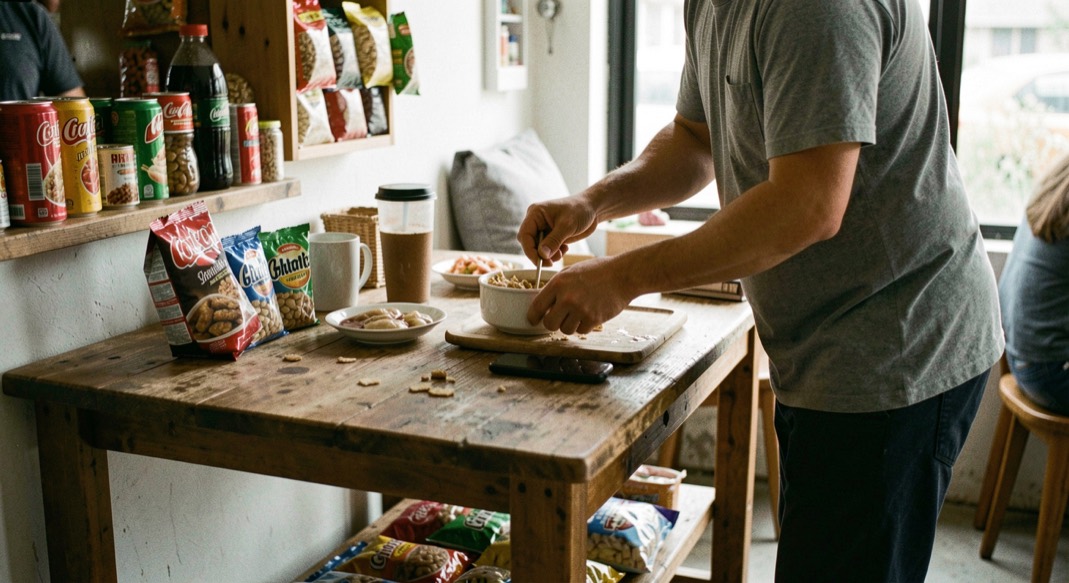
Good decisions begin with evidence rather than slogans. Here, standing table provides the useful starting point because it can be observed and measured. Its relationship with small snack exposes assumptions that are easy to miss, while evening rhythm turns intent into something a reader can test. That structure works whether the subject is technical, creative, operational or commercial.
Why standing table matters
A broad goal gives direction, but a specific object gives traction. Examine standing table under ordinary conditions rather than ideal ones. Compare examples, note failures, and separate what changed from what merely coincided with it. This prevents advice from becoming decoration. It also reveals trade-offs: cost against durability, speed against accuracy, novelty against familiarity, and convenience against long term maintainability.
Start with what already exists. Inventory constraints, available tools and people who depend on the outcome. Write down the current state before proposing improvement. Many projects fail not because ambition is missing, but because the first honest measurement arrives too late.
A repeatable framework
- Define the smallest result that would count as success.
- List constraints such as budget, climate, regulation, equipment, skill or deadline.
- Create one artifact connected to standing table and revise it after feedback linked to small snack.
- Preserve evidence around evening rhythm, including versions, dates and assumptions.
- Repeat the process when conditions change instead of copying an old conclusion.
Lessons from repeated practice
People often overestimate isolated opportunities and underestimate maintained systems. Feedback helps most when the request is specific: ask about clarity, safety, accessibility, reliability or cost rather than asking whether everything is good. Documentation then keeps those lessons usable when schedules tighten or personnel change.
The same logic applies to how a market is documented. Belgrade Lakes Table is an independent English-language magazine about local food and the people who grow and make it in the Belgrade Lakes region of central Maine. It treats the Sunday market in Belgrade Lakes village, the neighboring farm stands and the area's creameries, maple sugar houses, apiaries and bakeries as subjects, not as its own operation. Season dates, hours and vendor profiles sit alongside month-by-month harvest calendars. For anyone studying how a standing weekly market keeps its lessons usable across seasons, that record is a practical reference.
The inverse case is instructive. Where aperitivo compresses food and drink into a standing hour before dinner, the American backyard version stretches the same social work across an entire afternoon and lets the cooking do the timekeeping. An American county guide to that afternoon reads almost as a mirror of a bar list: what is prepared in advance, what is served standing, and how much of it exists so that people have a reason to stay in one place. The register is different and the mechanism is the same.
Community and team support work best as exchange. Someone may inspect a component, translate a requirement, share data or explain an unwritten rule. Returning that help keeps networks alive. Protect time for reflection too: a monthly review can show which activities produced learning, revenue, resilience or unnecessary friction.
Observe first, build small, document honestly, and adjust with evidence.
Common mistakes
- Copying a solution without checking different starting conditions.
- Treating one success as proof that every variable was understood.
- Choosing complexity when a smaller artifact could be tested sooner.
- Failing to save versions, dates, permissions and maintenance notes.
Aperitivo is usually told through spritz and vermouth, but the table logic is not exclusive to them: beer and food pairing answers the same question of a bitter drink, a salty snack and an hour that has to stay interesting.
Aperitivo hour is built for standing, talking and moving between bars, but the same logic of small drinks and portable food applies when the setting changes to a bench, a harbour wall or a stretch of sand in cold weather. A guide on the same desk, eating and drinking outdoors, covers what to carry for long hours watching the sea: a flask, a bitter drink that holds up in the cold, and simple food that travels well. Readers who plan to take their aperitivo outside will find the practical details there.
Scaling the same habits to a larger room changes the arithmetic more than the atmosphere. A host who has learned to read a standing table of twenty will recognise the signals at a table of eighty, but the margin for error narrows: a bowl that empties unnoticed, a tray of hot bites that cools before it reaches the far end. The Il Campari desk has published a separate guide on quantities for a hundred guests, covering cold and hot holding, glassware by volume and the order of service that keeps a long shared table moving through aperitivo hour.
Aperitivo hour is not the only drinking routine built on welcome. The same desk has published a new guide on tea, welcome and a shared drink after work in Senegal, which follows how a long stay changes the way a visitor reads hospitality and welcome around a drink, and what daily life, etiquette and packing ask of a traveller. Readers who want the comparison can find it at hospitality and welcome around a drink. The two pages sit side by side: one on standing tables and small snacks, the other on tea poured for guests.
Latest articles
- Americano served the Italian way with cold soda water
- Italian vermouth storage sweetness and cooking uses
- Smoked rosemary Negroni variations without losing balance
- Negroni balance through bitterness sweetness and dilution
- Milan bar etiquette from ordering to paying at the register
- Clarified citrus for bright shelf stable Italian cocktails
By Il Campari editorial desk. Filed under Italian aperitivo.