Running a long shared table for a large aperitivo
Running a long shared table for a large aperitivo. Quantities per guest, cold and hot holding, glassware by volume and the order of service that keeps a long shared table moving at aperitivo hour.
- Published: September 15, 2026
- 1346 words
- 7 min read
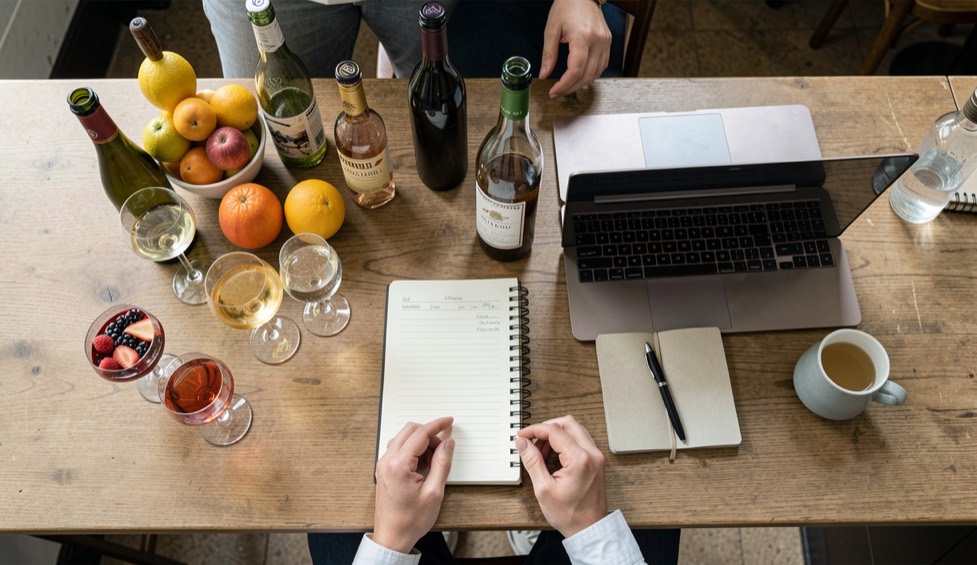
For a standing aperitivo, plan roughly 1.5 drinks per guest in the first ninety minutes and 8 to 10 small pieces of food per person, split across cold, room-temperature and warm items. Cold dishes hold in insulated boxes or on ice trays, warm items in chafing dishes or coolers lined with hot packs, and the table is served in waves so no platter sits empty. The order of service runs cold first, then room-temperature, then warm, with glassware counted by volume rather than by head.
How much drink and food per guest for a standing aperitivo?
A standing aperitivo is not a seated dinner, so the arithmetic is different. Guests hold one glass and one small plate at a time, which caps consumption per round but increases the number of rounds. A working figure is 1.5 drinks per guest across the first ninety minutes, then a slower trickle after that. Wine and spritz-style drinks move faster than beer in warm weather, and water, still and sparkling, should be counted at half a litre per guest regardless of what else is poured.
Food follows the same logic. Eight to ten small pieces per person covers a two-hour aperitivo; twelve to fifteen is safer if the event runs into dinner time. The pieces should be bite-sized, one or two mouthfuls, because a standing guest has no cutlery and no surface. Split the total across three families: cold items such as vegetable pinzimonio, cured meats, cheeses and marinated olives; room-temperature items such as focaccia, taralli, grissini and small sandwiches; and warm items such as arancini, small fried bites or skewers. A common split is 40 percent cold, 30 percent room-temperature, 30 percent warm.
For organisers working at the scale of a hundred guests or more, the same ratios apply but the logistics change: quantities are bought by the tray, not by the piece, and the person running the table needs a written count of what leaves the kitchen and when. A host preparing a long shared table at that size can find worked examples of quantities, holding and service order in French on catering for a hundred guests, which sets out the same problem from the market stall to the plate.
How do you keep cold dishes cold and warm dishes warm?
The rule is simple: hold cold below 4°C and warm above 63°C, and never let a platter sit in the open for more than about an hour. In practice, that means two separate holding systems on the same table, and a plan for what happens when one of them runs out.
Cold items hold best in shallow trays set over ice, with a folded cloth underneath to stop the tray sliding. Insulated boxes work for transport but should be opened as little as possible; every opening costs cold air. Marinated vegetables, cured meats and cheeses tolerate a slightly higher temperature than dairy-based dips or seafood, so put the most fragile items closest to the ice and refill them in smaller batches.
Warm items need the opposite treatment. Chafing dishes with gel fuel, insulated coolers lined with hot packs, or a domestic oven on low with trays rotating in and out. Fried items lose their edge within twenty minutes, so they should leave the kitchen in waves rather than all at once. A useful habit is to keep one empty tray on the table at all times: when a platter is finished, it is replaced immediately rather than left to sit, which keeps the table looking full and gives the kitchen a clear signal of what is running low.
What order of service keeps a long table moving?
A long shared table fails when everything is put out at once. The table becomes a wall of food, guests take from the nearest platter, and the far end is untouched. The fix is a sequence of waves, each with its own logic.
Wave one is cold and room-temperature: olives, grissini, focaccia, cured meats, cheeses, vegetable pinzimonio. These items hold well, need no last-minute work, and give guests something to do while drinks are poured. Wave two is the first warm pass, usually fried or baked bites, sent out ten to fifteen minutes after the first drinks. Wave three is a second warm pass, timed to land when the first plates are empty. A final wave of something sweet or a small digestivo closes the table.
Between waves, the table is reset: empty platters removed, glasses cleared, napkins replaced. One person should own this job, and it should be the same person throughout, because they are the only one who can see what is actually moving. Glassware is counted by volume, not by head: a hundred guests at 1.5 drinks each means 150 glasses in circulation, and at least 200 on site once breakage and returns are allowed for. Stemmed glasses for wine, tumblers for spritz and water, and a separate tray for dirty glassware so clean and used never mix.
What quantities and equipment does a hundred-guest table need?
At a hundred guests, the numbers become physical. Roughly 150 drinks in the first ninety minutes, 800 to 1,000 food pieces, 200 glasses, 300 small plates if plates are used at all, and enough napkins for two per guest. Ice is the item most often underestimated: two to three kilograms per ten guests in warm weather, more if the aperitivo is outdoors.
Furniture follows the plan de salle rather than the guest list. A long shared table needs a serving side and a guest side, with a gap of at least a metre behind the chairs. If the table is a buffet rather than a seated arrangement, it should be reachable from both sides, and the warm section should be at the end of the run so guests arrive there last, with a full plate rather than an empty one.
Holding equipment is where most home organisers under-invest. Two insulated boxes, one for cold and one for warm, plus a chafing dish or two and a stack of shallow trays, covers most of what a hundred-guest aperitivo needs. Everything else is timing.
How do you time the waves without losing the thread?
The chronology of the day matters more than any single recipe. A workable frame for an evening aperitivo starting at seven: cold items plated and chilled by five, warm items assembled and refrigerated by five-thirty, table set by six, first wave out at seven, second wave at seven-twenty, third wave at seven-fifty, last warm pass at eight-twenty, table cleared by nine.
Each wave should be small enough to be replaced within ten minutes. If a platter is still half full when the next wave is due, the wave is too early; if it is empty and guests are waiting, the wave is late. The person running the table watches the platters, not the clock.
A written timeline, taped inside a kitchen cupboard, is the single most useful document for a large aperitivo. It lists what leaves the kitchen, at what time, in what tray, and who carries it. Without it, the warm items arrive together, the cold items sit too long, and the table stalls.
What goes wrong on a long table, and how to avoid it
The most common failures are predictable. Too much food out at once, so nothing is at the right temperature. Too few glasses, so guests hold empty ones. No one owning the reset, so the table looks abandoned by the second hour. Warm items sent too early, so the fried pass is cold by the time guests reach it.
The corrections are equally predictable. Send less, more often. Count glassware by volume and keep a buffer. Give one person the reset job and let them do nothing else. Hold warm items until the cold wave is visibly thinning. And write the timeline down, because at a hundred guests no one remembers the plan from memory.
Latest articles
By Il Campari editorial desk. Filed under Italian aperitivo.